
Scale is predetermined, structure is up to you – Hengpu Consulting enters NCUE, discusses financial intelligence with nearly 200 students
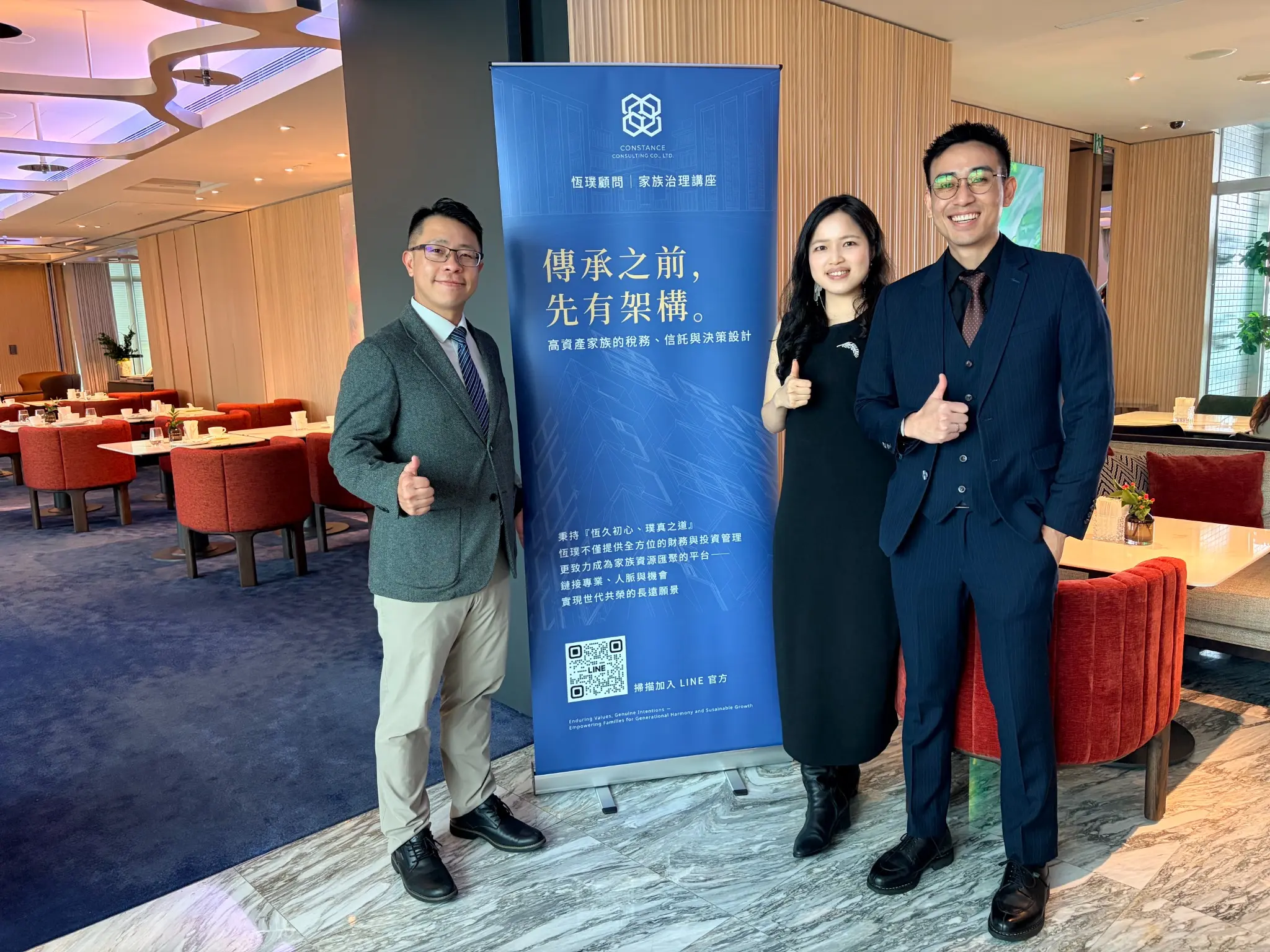
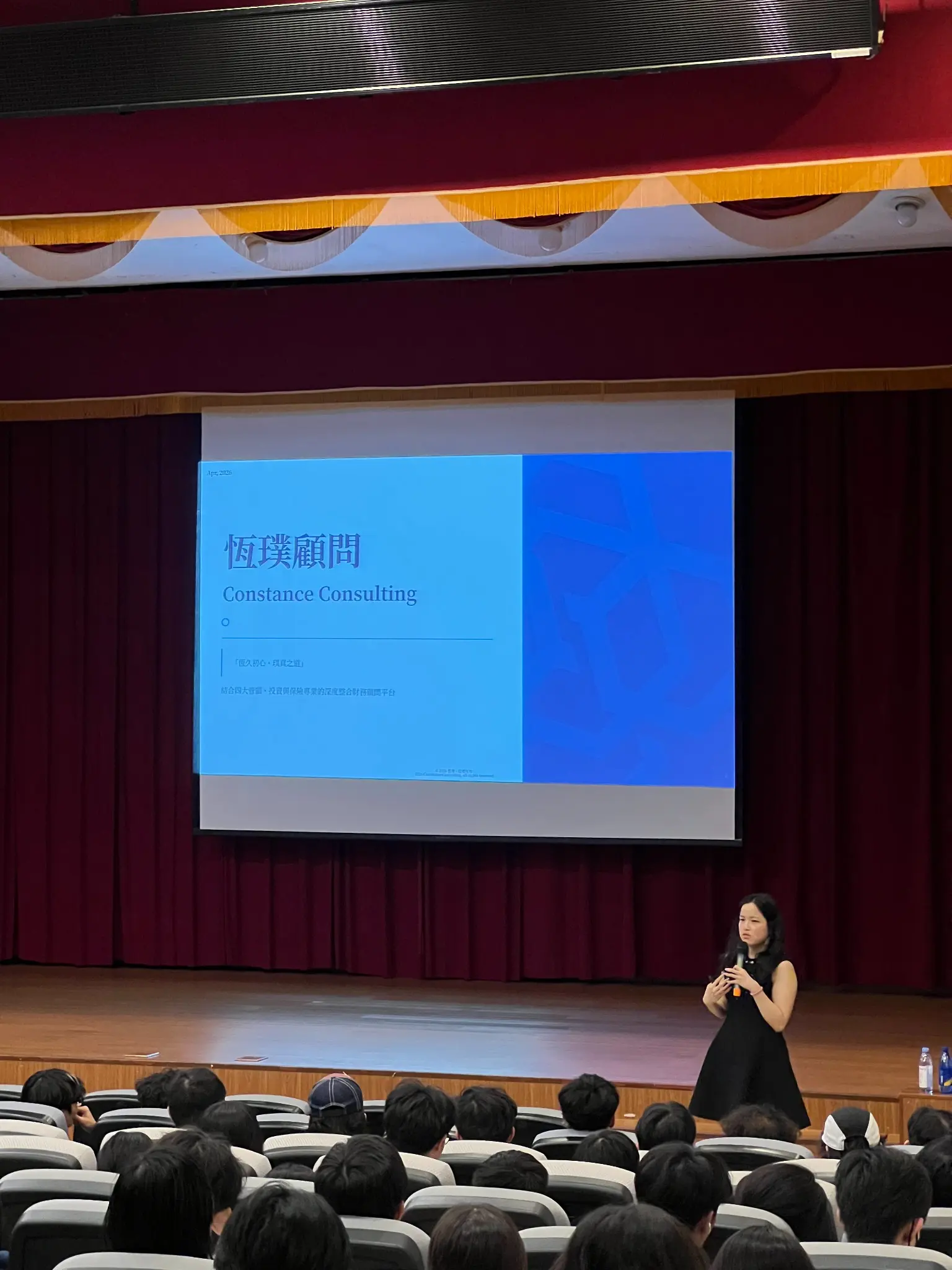
On the evening of April 22nd, Hengpu Consulting was invited by the Changhua Normal University Blockchain Research Society to host a financial intelligence lecture titled "One Day You'll Really Make Money." The lecture was led by Chloe Wang and Anderson Yuan, founders of Hengpu Consulting, who have practical experience from the Big Four accounting firms.
Nearly 200 students attended, filling the auditorium to near capacity.
Over the past year, Hengpu's lectures have mostly targeted high-net-worth families, discussing inheritance, structures, and governance.
This one is different: The audience is made up of college students around twenty years old, with likely only a few thousand dollars in their bank accounts.
We believe that the mindset family offices encounter daily shouldn't be learned only after acquiring assets.
Walking onto campus and handing it over to the next generation is the practice of Hengpu's "Constance Sustainability" service core.
It's not that you need to be rich to manage your money; it's that you need a structure first for wealth to follow.
The seminar begins with Chloe addressing a common myth: "Is it too early to talk about financial management if I only have a few thousand dollars in my account?"
The answer is—the real key is never about how much capital you have, but whether you have the mindset of an "asset owner."
The definition of wealth is not the balance in your bank account.
Rather, it is the "ability to choose": True wealth is when you don't have to tolerate an unpleasant environment just to survive.
The essence of financial management is creating options for yourself.
This concept clearly resonated with the students: in the post-class survey, 88% of students agreed that "financial literacy is about increasing options."
Two young people, two lives ten years later
The entire lecture is threaded through with a pair of fictional dual-path narratives: John and Wilson, two young men with similar starting salaries and comparable abilities. Wilson is the typical traditional elite, striving for promotion and a refined lifestyle, but his output is highly dependent on his personal time and physical strength, and his asset structure is singular. John, on the other hand, consciously structures diverse assets and personal credit, building a system that doesn't rely on a single environment.
A compound interest simulation spanning forty-three years brings this story to a close: with the same starting point, the asset gap between two people eventually widened to over twenty times.
Chloe also honestly explained the limitations of the simulation to the students – it’s not easy to maintain high discipline in the long run, and life is full of variables outside of the model.
What this simulation is really trying to convey is not the amount of money, butSize may be fated, but structure is always up to you.
Noise Cancellation: Building Your Own Judgment System in the Age of Noise
For students in the blockchain research society, the lecture dedicated a considerable portion to "risk identification."
This is also the core of "noise reduction," one of the three pillars of the Hengpu brand.
Starting with the bullet hole stories of WWII fighter planes: the military originally wanted to add armor to the heavily bullet-riddled wings, but statisticians pointed out that the truly fatal locations were precisely the engines and cockpits – those places where planes were "hit and didn't return, thus leaving no data." This is survivor bias.
Next, let's discuss how algorithms feed information cocoons: extreme wealth accumulation cases are repeatedly amplified and broadcast, while steady paths remain silent.
Finally, let's break down common on-chain techniques like high-frequency arbitrage bots and "sandwich attacks" that occur between buy and sell orders, and demonstrate how to examine chip distribution using on-chain data. Practice asking the most important question: "Who is paying for this profit?"
Rational profits come from genuine value creation; high returns that cannot find a counter-value mostly come from later entrants' principal.
This paragraph concludes with a sentence many students jotted down that night:Don't rush to believe without the ability to explain the returns.
Long-term view: Urban planning of taxes, health, and assets
The latter part of the lecture zooms out the perspective.
When investing, don't look at nominal returns, but rather after-tax profits—the same allocation, placed within different tax structures, will yield vastly different long-term results.
When Chloe discussed the supplementary premium and tax friction behind Taiwan's high dividend stocks, the most straightforward cognitive breakthrough appeared in the post-class questionnaire: "So, you have to pay the National Health Insurance supplementary premium for Taiwan stocks."
The most popular analogy in the feedback is "financial urban planning": flood dikes represent emergency reserves and basic protection, commercial districts represent stable mainstream investments, and digital special zones represent high-volatility advanced assets that must be strictly controlled in proportion.
Health is the most fundamental foundation of this city – emotional and physical well-being directly determine the quality of every financial decision.
A student summarized their takeaway from the questionnaire as: "Managing personal finances like urban planning."
The first step after students leave the lecture hall
Of the 110 questionnaires collected after the class, nearly 90% of students indicated that the lecture helped them establish correct wealth concepts, and a similar proportion, nearly 90%, stated they have a clearer understanding of "financial mistakes to avoid."
What further reassures us is the willingness to act: when asked about the first small thing they wanted to do after leaving the lecture hall, the most students chose "researching how to open a securities account," followed by "calmly organizing this month's income and expenses."
This lecture is truly complete when knowledge is transformed into action.
And after the lecture
At the end of the lecture, Chloe introduced the three main pillars of Hengpu's services to the students.
Constance Consulting, Constance Club, and Constance Sustainability
and share why we insist on a zero product sales positioning: only by not profiting from selling products can recommendations truly stand on the client's side.
There are no products in this lecture, nor will there be in the future.
What we take away are the focused eyes of the students; what we hope to leave behind is a framework for thinking that can accompany them for the next forty years.
Hengpu will continue to enter campuses
If your college student association or department society intends to invite a financial literacy lecture
Welcome to contact us:
[email protected]
Anderson Yuan
The content described in this article is for educational purposes and scenario simulation only, and does not constitute any investment advice or guarantee of returns. Investing involves risk. Please carefully assess your own situation or seek professional advice before making any financial decisions.